Architecture
High-level OCPPLab architecture for OCPP, OCPI, data, and Dashboard.
Building blocks
Charge points --OCPP--> Gateway / proxy --> one or more CPMS backends
\
--> Core services / DB
Partners/hubs --OCPI--> Roaming stack --/
Dashboard (browser) --------> API / RSC --/
Your systems <--webhooks / APIs-------/- OCPP gateway — long-lived WebSocket connections, version-aware message handling
- Proxy — stable field URL; multi-backend routes for dual-run and cutover (Multi-backend routing)
- OCPI stack — REST modules, credentials, push/pull
- Data plane — chargers, sessions, maps, observability (Dashboard data domains)
- Dashboard — Next.js App Router operator UI (maps, chargers, sessions, org settings)
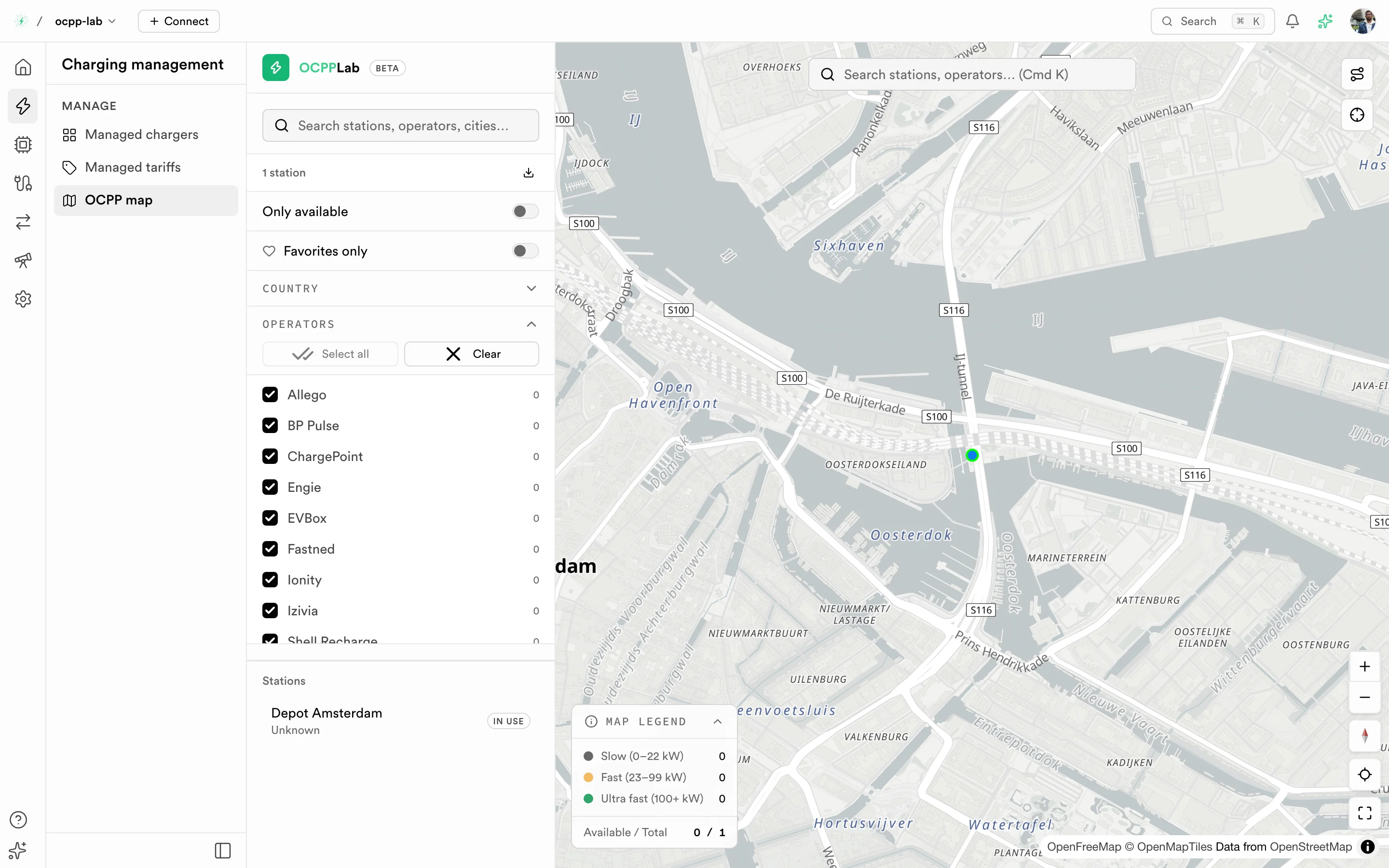
OCPP map — the Dashboard reads the same data plane as the gateway, so a station's status on the map is its live field state.
Product surfaces
OCPPLab ships as a family of web apps that share the same design system:
- Dashboard — authenticated operator console
- Docs — this site (guides and API reference)
- Marketing site — public product pages
Shared UI tokens (ui, ui-patterns) keep surfaces visually consistent.
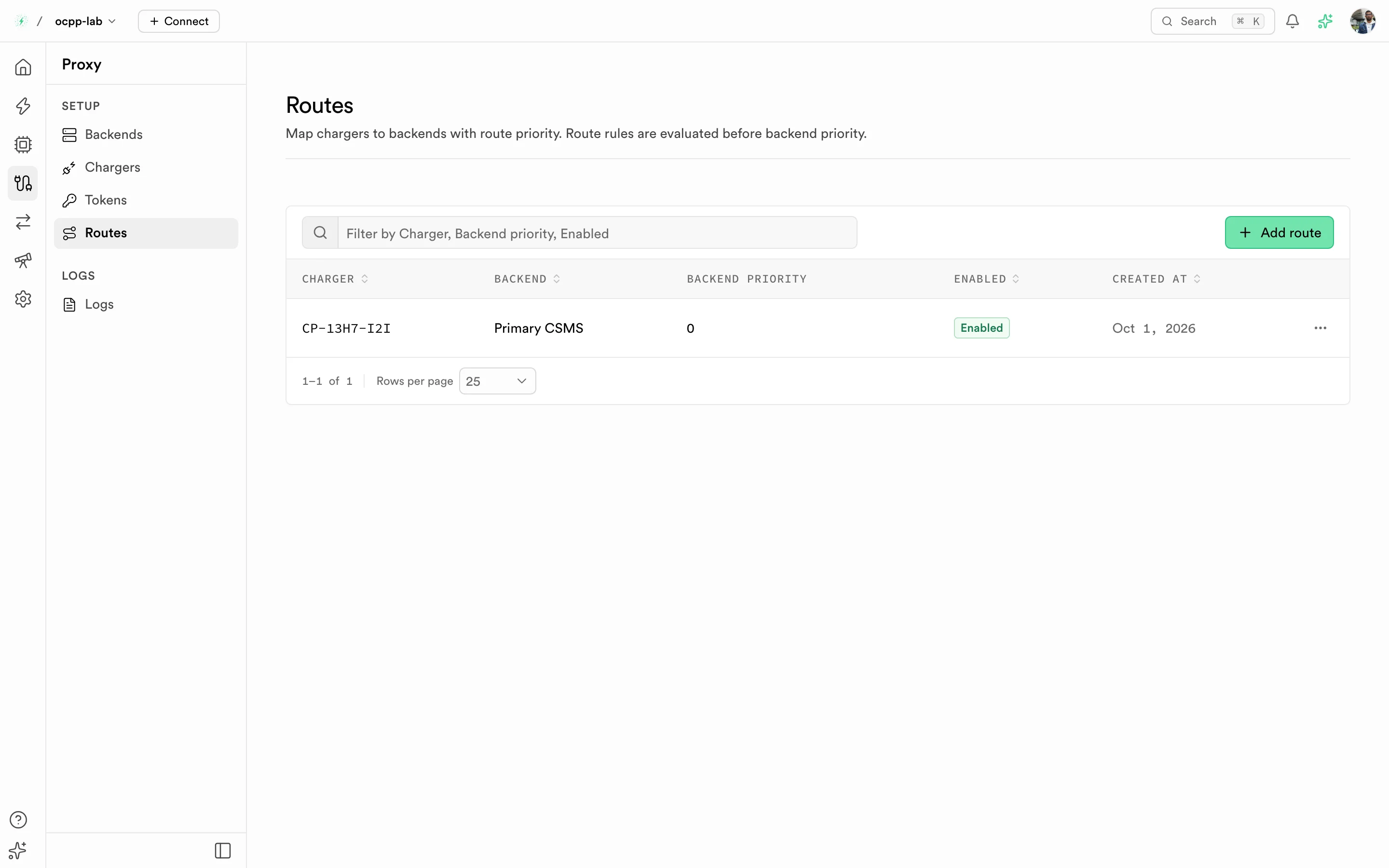
Proxy routes — one charger, two backends ranked by priority. The charger keeps one field URL while backends change behind it.
How data flows
Field connectivity
Charge points terminate on the OCPP gateway; session lifecycle is normalized into core services.
Roaming exchange
Partners and hubs talk OCPI; credentials and module enablement gate push/pull traffic.
Operator UI
Dashboard reads the same data plane operators manage day to day (maps, chargers, sessions).
Integrations
Webhooks and APIs push events to your billing, CRM, or automation systems.
Design principles
- Protocol honesty — surface real connection and session state; no fake demo metrics in production UI
- Multi-version — OCPP and OCPI versions coexist; prefer parallel queries
- Tenant isolation — org boundary on every sensitive path