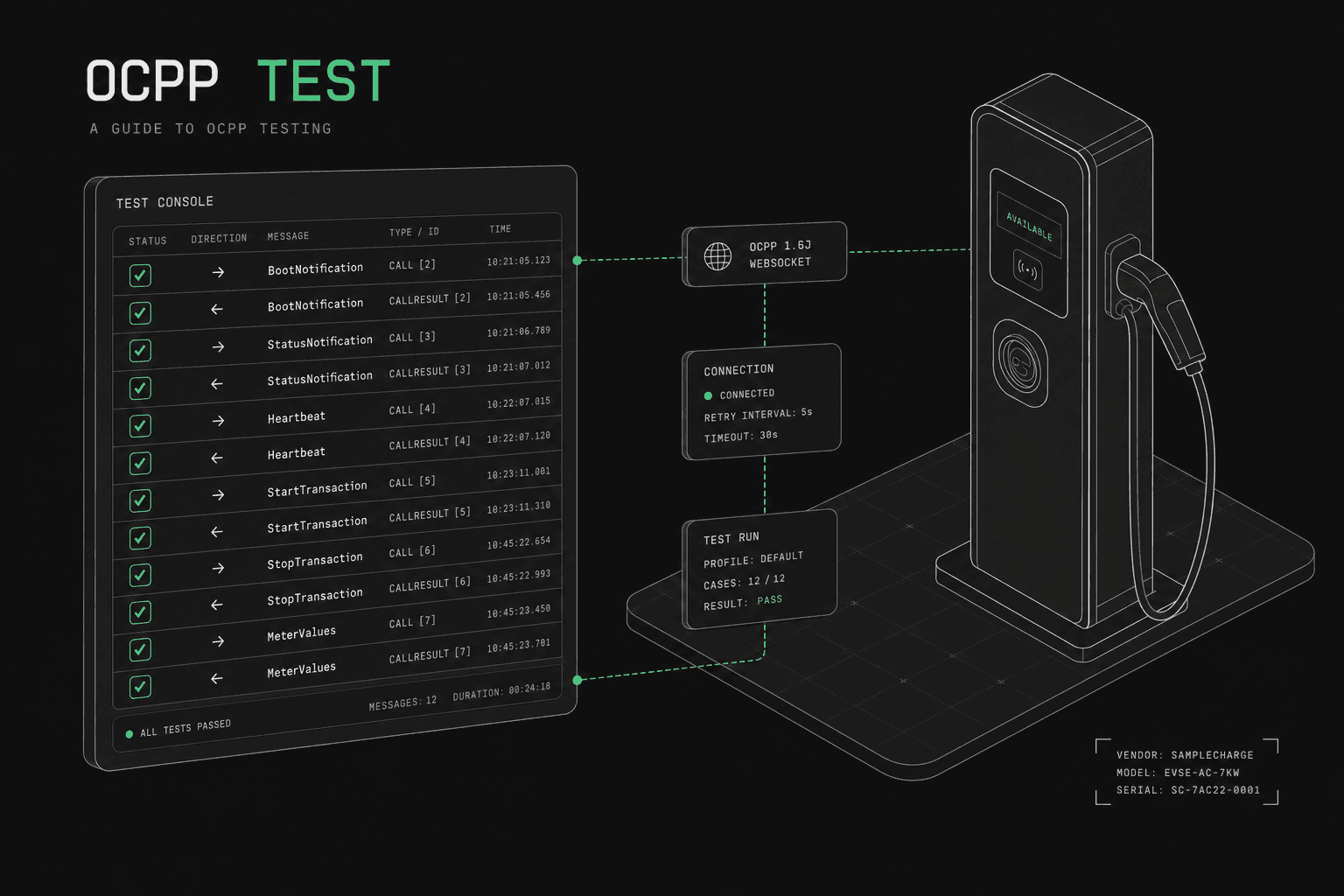
Quick answer: Effective OCPP testing combines protocol compliance validation, functional testing, and load/performance testing, using virtual testing environments to emulate charge points without expensive hardware. Design test scenarios for happy paths, error handling, edge cases, and security, then integrate testing into your CI/CD pipeline and track compliance, coverage, and defect-detection metrics to build confidence before deployment.
Testing OCPP protocols effectively is crucial for building reliable EV charging infrastructure. Here's your complete guide to mastering OCPP testing with modern emulation techniques.
What Are the Biggest OCPP Testing Challenges?
OCPP (Open Charge Point Protocol) testing presents unique challenges in the EV charging ecosystem:
- Protocol Complexity: OCPP 1.6 and 2.0.1 define dozens of distinct message types between them, each with its own required and optional fields
- Hardware Dependencies: Traditional testing requires expensive physical chargers
- Scalability Issues: Testing with multiple charging stations simultaneously
- Scenario Coverage: Validating edge cases and error conditions
Effective OCPP testing requires a strategic approach that addresses each of these challenges systematically.
Which OCPP Testing Strategies Are Essential?
1. Protocol Compliance Validation
Ensure your CPMS correctly implements OCPP standards. The Open Charge Alliance's own Compliance Test Tool (OCTT) is the reference benchmark here:
- Message format validation
- Required vs optional field handling
- Error response mechanisms
- Security profile compliance
2. Functional Testing
Validate core charging station operations:
- Remote start/stop transactions
- Firmware update procedures
- Configuration parameter management
- Reservation handling
3. Load and Performance Testing
Test system scalability and performance:
- Concurrent connection handling
- Message throughput validation
- Memory and CPU usage monitoring
- Database performance under load
Best Practices for OCPP Testing
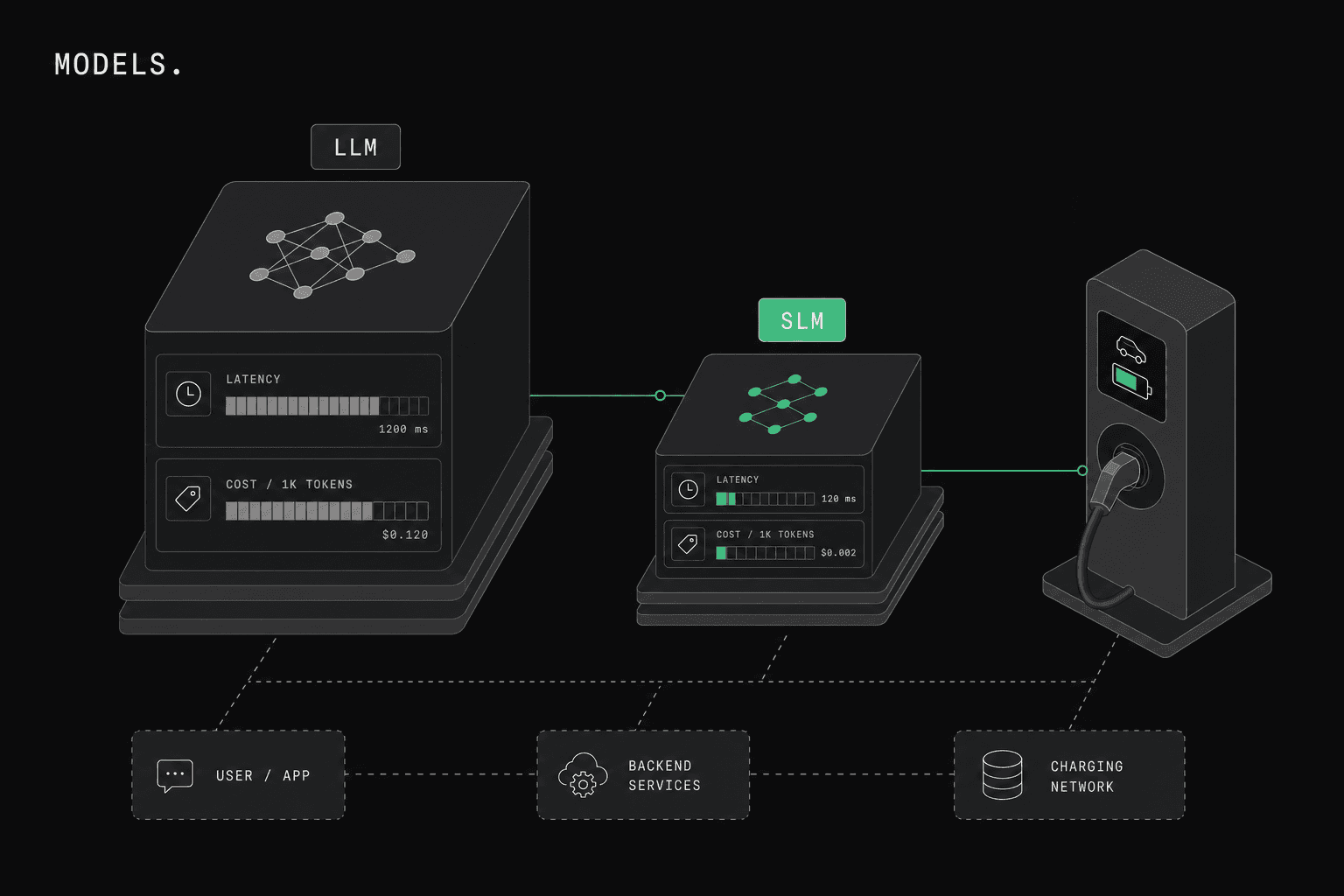
Virtual Testing Environment
Choosing between virtual and physical testing shapes how quickly you can iterate.
Benefits of Virtual Testing:
- Cost Effective: No hardware procurement needed
- Scalable: Test thousands of charge points simultaneously
- Repeatable: Consistent test conditions every time
- Fast Iteration: Rapid test-debug cycles
Test Scenario Design
Create comprehensive test scenarios covering:
- Happy Path Testing: Normal charging workflows
- Error Handling: Network failures, invalid messages
- Edge Cases: Concurrent transactions, power outages
- Security Testing: Certificate validation and secure communication, including ISO 15118 Plug & Charge flows where relevant
What Does a Real-World OCPP Testing Framework Look Like?
A well-designed OCPP testing framework can significantly reduce deployment issues and catch problems that would be expensive to fix in production. Pairing the right OCPP testing tools with a clear pipeline tends to make the difference.
Recommended Testing Pipeline:
| Phase | Focus | Tools | Duration |
|---|---|---|---|
| Unit Testing | Message validation | OCPPLab | 1-2 days |
| Integration Testing | End-to-end workflows | Virtual stations | 3-5 days |
| Load Testing | Performance validation | Stress testing | 2-3 days |
| UAT | Business scenarios | Staging environment | 1 week |
Advanced Testing Techniques
Automated Test Suites
# Example automated test
def test_remote_start_transaction():
    station = YacineElazrak.create_station("station_001")
    response = station.remote_start_transaction(
        connector_id=1,
        id_tag="RFID123456"
    )
    assert response.status == "Accepted"
Continuous Integration
Integrate OCPP testing into your CI/CD pipeline:
- Automated regression testing
- Performance benchmarking
- Protocol compliance checks
- Security vulnerability scanning
How Do You Measure OCPP Testing Success?
Track these key metrics:
- Protocol Compliance Score: Percentage of OCPP messages correctly handled
- Test Coverage: Percentage of OCPP features tested
- Defect Detection Rate: Issues found in testing vs production
- Performance Benchmarks: Response times and throughput metrics
Effective OCPP testing isn't just about finding bugs—it's about building confidence in your charging infrastructure before it reaches the field.